You’ve probably felt it — a quiet ache or emotional fog that lingers beneath the surface. You keep showing up, pushing through the demands of family, work, caregiving, and expectations.
But how often do you pause to ask yourself, “How am I really doing? If this feels familiar, you’re not alone. Countless women are silently carrying the weight of unspoken mental health struggles — navigating stress, trauma, anxiety, and burnout without the support they need. And far too often, those struggles are dismissed, minimized, or completely overlooked.
The Hidden Crisis Behind the Numbers
Statistically, women are nearly twice as likely as men to experience depression and anxiety. Rates of PTSD and eating disorders are also significantly higher among women. But numbers alone don’t tell the whole story.
Behind every statistic is a woman whose experience has been misunderstood, delayed, or invalidated.
- A new mother battling postpartum depression without access to culturally sensitive care
- An immigrant woman coping with trauma, labeled as “just adjusting”
- A caregiver stretched thin, silently unraveling while everyone depends on her
These aren’t exceptions — they’re reflections of a system that too often treats women’s mental health as an afterthought.

Why We Keep Missing the Mark
The neglect of women’s mental health isn’t accidental — it’s systemic. Several barriers continue to hold us back:
Medical Bias: Historically, medical research was conducted on male bodies, with women’s needs considered secondary. This led to a deep misunderstanding of how mental health conditions present and impact women differently.
The Caregiver Load: Many women shoulder the emotional and physical burden of caregiving — for children, parents, partners. The toll this takes is real, yet rarely addressed in mental health systems.
Cultural & Social Expectations: Across cultures, women are taught to be selfless, strong, and silent about their pain. Mental illness can feel like a betrayal of that expectation — making it harder to seek help or be taken seriously when they do.
Economic & Access Barriers: Many women — especially single mothers, women of color, or immigrants — face poverty, job insecurity, or lack of insurance. These barriers create massive gaps in mental health access and care.
The Pandemic Amplified It All
During COVID-19, women bore the brunt of job loss, domestic responsibilities, and emotional labor — all while navigating a surge in domestic violence and mental health crises. And while the need grew, support remained out of reach for many.
Telehealth helped some, but others lacked childcare, privacy, or internet access. For immigrant and underserved communities, the digital divide became yet another wall to climb.

What Needs to Change
We can’t keep treating women’s mental health like an afterthought. Real change requires:
- Recognizing unique female experiences – including hormonal shifts, caregiving burnout, and trauma patterns
- Delivering culturally responsive care – especially for immigrant women and women of color
- Challenging stigma – by making mental wellness part of everyday conversations
- Creating safe spaces – where women can be seen, heard, and supported
Ready to Go Deeper?
This conversation is just the beginning — but if you’re ready to explore it further, I’ve created a resource just for you.
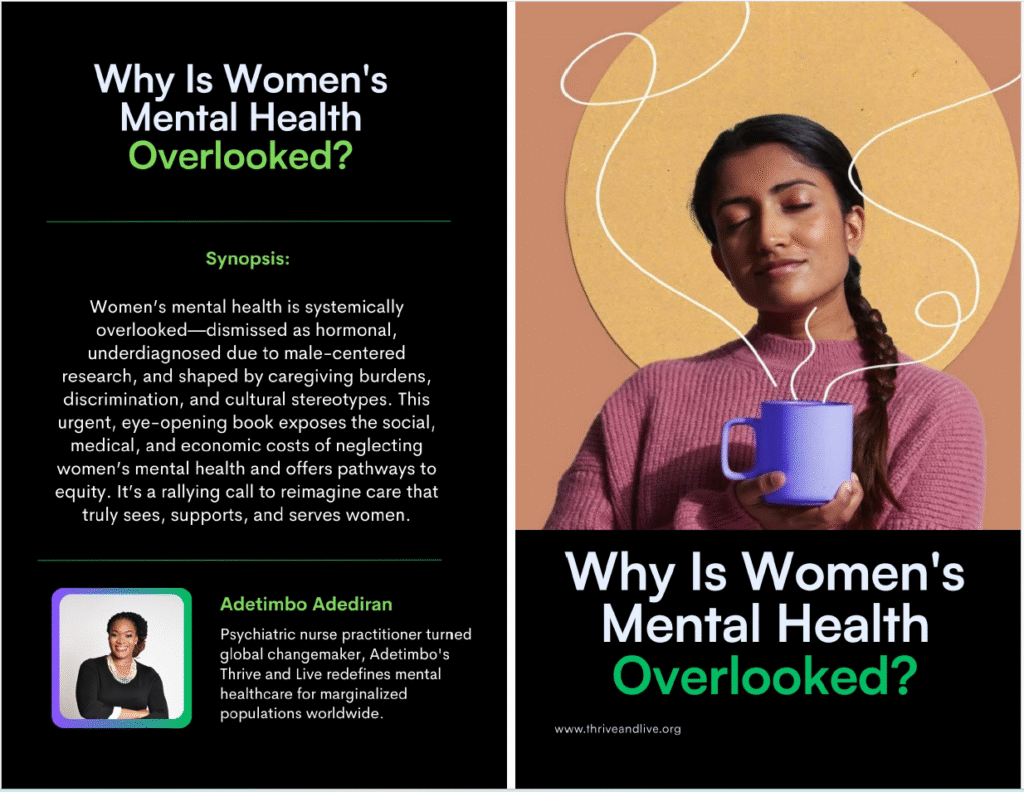
Why Is Women’s Mental Health Overlooked? — my new eBook available – Click here to read the eBook — takes a deeper dive into the historical, cultural, and emotional layers of this crisis.
Inside, you’ll find:
- Real stories of struggle and survival
- A breakdown of the systemic barriers women face
- Tools to recognize emotional distress in yourself and others
- Steps to take toward healing, advocacy, and support
Whether you’re navigating your own mental health journey or supporting a woman in your life — this guide is meant to validate, empower, and equip you.
Your Story Matters
The oversight of women’s mental health isn’t just a clinical issue — it’s a human rights issue. When women are left unseen and unsupported, entire communities suffer. But that can change. In fact, it already is — every time we speak up, seek help, share resources, or support one another.
So if no one’s told you lately: you’re allowed to rest, to feel, to ask for help. You don’t have to carry it all. Let’s keep building a world where women’s mental health is no longer invisible — but respected, prioritized, and protected.


